That familiar, uncomfortable burning sensation in your chest. The sour, acidic taste in the back of your throat after a heavy meal. For many, this is an occasional nuisance, a price to pay for that extra-spicy curry or late-night pizza. But when does this occasional discomfort cross the line into a chronic medical condition requiring professional attention?
This article is your definitive guide to understanding the critical difference between heartburn and Gastroesophageal Reflux Disease (GERD). We will move beyond quick-fix antacids and internet myths to explore the inner workings of your digestive system, identify the red flags that demand a doctor’s visit, and equip you with the knowledge and questions you need to become an active, informed participant in your healthcare journey. Our goal is not to provide a diagnosis—only a qualified healthcare professional can do that—but to empower you with evidence-based information to seek the right care at the right time.
Part 1: Understanding the Burn – The Anatomy of Acid Reflux
To understand when reflux becomes a problem, we must first understand how the system is supposed to work.
The Lower Esophageal Sphincter (LES): The Gateway Guard
At the bottom of your esophagus, where it meets the stomach, lies a critical ring of muscle called the Lower Esophageal Sphincter (LES). Think of the LES as a sophisticated, one-way valve. Its job is to relax and open to allow food and liquid to pass into the stomach, and then to contract tightly to seal the passage shut, preventing stomach contents from flowing back up.
Reflux occurs when this LES valve is dysfunctional. It may be too weak to close properly, or it may relax inappropriately at the wrong times. When this happens, the highly acidic contents of the stomach—a mix of food, digestive enzymes, and hydrochloric acid—can wash back up into the esophagus.
The Vulnerable Esophagus: An Organ Not Built for Acid
While your stomach is lined with a special mucus-coated tissue designed to withstand its corrosive environment, your esophagus is not. When stomach acid repeatedly bathes the delicate lining of the esophagus, it causes irritation, inflammation, and the sensation we know as heartburn (or acid indigestion).
Occasional, brief episodes of this are normal. But when the frequency, duration, or intensity of these acid exposures increases, it can lead to significant damage and the development of GERD.
Part 2: Heartburn vs. GERD – Defining the Divide
This is the most crucial distinction for anyone experiencing reflux symptoms.
What is Heartburn?
- Definition: Heartburn is a symptom, not a disease. It is the specific feeling of burning discomfort felt behind the breastbone, often rising up toward the throat.
- Frequency: Occasional and episodic. It might happen after a large meal, when lying down, or after consuming specific trigger foods (e.g., coffee, citrus, fried foods).
- Management: Typically responds well to lifestyle modifications and over-the-counter (OTC) medications like antacids or H2 blockers.
- Key Takeaway: Heartburn is common. Nearly everyone experiences it at some point.
What is GERD (Gastroesophageal Reflux Disease)?
- Definition: GERD is a chronic medical condition diagnosed when the reflux of stomach contents causes troublesome symptoms and/or complications.
- Frequency: The American College of Gastroenterology (ACG) defines “troublesome” symptoms as those occurring two or more times per week. It is persistent and long-lasting.
- The Complication Factor: Even if symptoms aren’t weekly, a diagnosis of GERD can be made if there is evidence of esophageal damage, such as esophagitis (inflammation), strictures (narrowing), or pre-cancerous changes (Barrett’s esophagus).
- Key Takeaway: GERD is a disease state that requires a medical diagnosis and often long-term management strategies to prevent damage.
Part 3: The Spectrum of Symptoms – It’s Not Just Heartburn
While heartburn is the hallmark symptom, GERD can manifest in many ways. Recognizing the full range of symptoms is key to identifying the condition.
Typical (Esophageal) Symptoms:
- Heartburn: Burning sensation in the chest.
- Regurgitation: The sensation of stomach acid or undigested food rising into the throat or mouth, often accompanied by a sour or bitter taste. This can happen without heartburn.
- Dysphagia: Difficulty swallowing or the sensation that food is “stuck” in your chest or throat.
- Chest Pain: Non-cardiac chest pain that can be severe and mimic the pain of a heart attack. Any unexplained chest pain warrants immediate medical evaluation to rule out cardiac causes.
Atypical (Extra-esophageal) Symptoms:
These symptoms occur when stomach acid reaches beyond the esophagus, affecting other areas. They are often missed as signs of GERD.
- Chronic Cough: A persistent, dry cough, especially at night or after meals, that is not caused by a respiratory condition.
- Laryngopharyngeal Reflux (LPR) or “Silent Reflux”: This involves acid reaching the voice box (larynx) and throat (pharynx). Symptoms include:
- Hoarseness or chronic voice changes
- The constant feeling of a lump in the throat (globus sensation)
- Frequent throat clearing
- Post-nasal drip
- Sore throat
- Asthma and Wheezing: Acid reflux can trigger bronchospasms and worsen asthma, particularly in adults.
- Dental Erosion: Chronic acid in the mouth can wear away tooth enamel.
- Chronic Sinusitis and Ear Infections: In some cases, reflux can contribute to chronic sinus and ear problems.
Part 4: When to See a Doctor – The Red Flags You Must Not Ignore
This is the core of the article. Do not hesitate to schedule an appointment with your primary care physician or a gastroenterologist if you experience any of the following:
1. Frequency and Severity: The “Twice-a-Week” Rule.
If you have heartburn or other reflux symptoms two or more times a week, it’s time to see a doctor. This frequency is the clinical benchmark that often separates simple heartburn from GERD.
2. Failure of Over-the-Counter (OTC) Medications.
If you find yourself relying on OTC antacids, H2 blockers (e.g., Pepcid, Zantac), or proton pump inhibitors (e.g., Prilosec OTC, Nexium 24HR) for more than two weeks without complete relief, or if your symptoms return as soon as you stop taking them, you need a professional evaluation. Long-term unsupervised use of these medications can have side effects.
3. The Presence of “Alarm Symptoms.”
These symptoms suggest potential complications and require prompt medical attention:
- Difficulty Swallowing (Dysphagia): The feeling that food is getting stuck on the way down. This can indicate an esophageal stricture (narrowing) or, rarely, a more serious issue.
- Painful Swallowing (Odynophagia): Sharp pain when you swallow, which can be a sign of severe esophagitis or an ulcer.
- Unexplained Weight Loss: Losing weight without trying is always a red flag that warrants investigation.
- Gastrointestinal Bleeding: This can present as:
- Vomiting Blood (Hematemesis): Which may appear red or look like coffee grounds.
- Black, Tarry Stools (Melena): Indicating digested blood.
- Anemia: Symptoms like fatigue, pale skin, and shortness of breath can be caused by chronic, slow bleeding from the esophagus.
- Persistent Nausea or Vomiting.
4. Symptoms Interfering with Daily Life.
If your symptoms are disrupting your sleep, affecting your work performance, causing you to avoid certain foods or social activities, or significantly reducing your quality of life, it’s time to seek help.
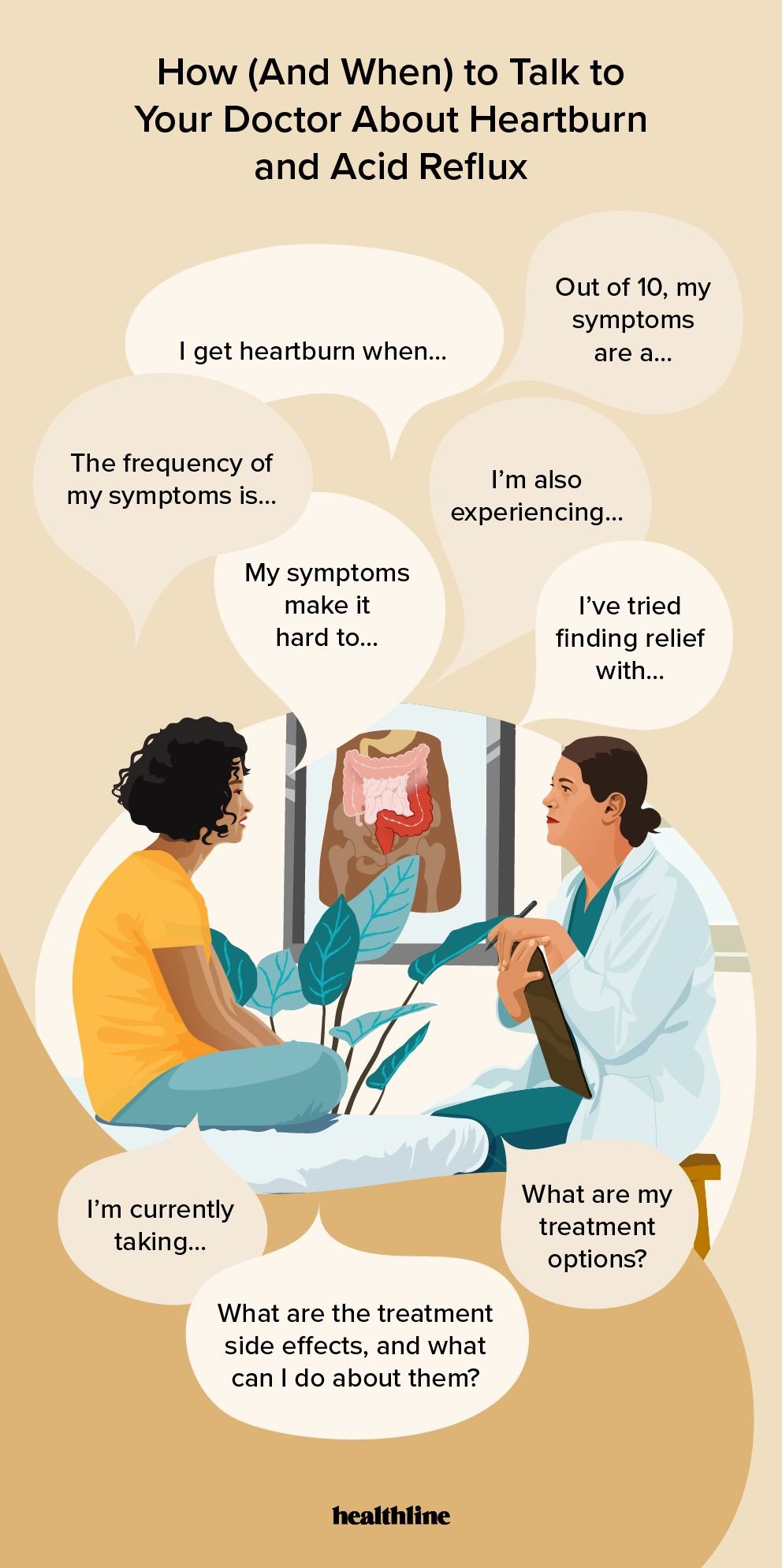
Part 5: Preparing for Your Doctor’s Appointment – Be Your Own Best Advocate
Walking into a doctor’s office can be intimidating. Being prepared ensures you make the most of your limited time and provides your doctor with the information needed for an accurate diagnosis.
Before Your Appointment:
- Keep a “Reflux Diary” for at least one week. This is an incredibly powerful tool. Document:
- What you eat and drink: Note the timing and size of meals.
- When symptoms occur: Time of day and relation to meals or lying down.
- The specific symptoms: Heartburn, regurgitation, cough, etc.
- What provides relief: Antacids, sitting up, etc.
- Lifestyle factors: Stress levels, sleep patterns, exercise.
What to Bring:
- Your symptom diary.
- A list of all medications you are taking, including prescriptions, OTC drugs, and supplements.
- A list of your known allergies.
- Your medical history and any previous test results.
Read more: Probiotics vs. Prebiotics: A Beginner’s Guide to Optimizing Your Gut Health
Part 6: What to Ask Your Doctor About Acid Reflux – The Essential Question List
Having a list of questions prevents you from forgetting what you wanted to ask in the moment. Here is a comprehensive list, categorized for clarity.
Questions for Diagnosis and Understanding:
- “Based on my symptoms, do I have occasional heartburn or is it likely GERD?”
- “What is the probable cause of my reflux? Is it a weak LES, a hiatal hernia, or something else?”
- “Do I need any diagnostic tests, such as an endoscopy, pH monitoring, or esophageal manometry? What do these tests involve?”
- “Could my symptoms be caused by something other than GERD?” (e.g., gallbladder issues, ulcers, heart problems)
Questions About Treatment and Medication:
- “What are the treatment goals for my specific case? Is it just symptom relief or preventing complications?”
- “What lifestyle changes do you recommend as a first step?”
- “If I need medication, what do you prescribe and why? What are the differences between H2 blockers and Proton Pump Inhibitors (PPIs)?”
- “What are the potential side effects of this medication, especially with long-term use?”
- “How long will I need to be on this medication? What does the tapering-off process look like?”
- “What should I do if my medication stops working or symptoms return?”
Questions About Long-Term Management and Complications:
- “What are the potential long-term complications of untreated or poorly controlled GERD?”
- “What is Barrett’s esophagus, and am I at risk? Do I need surveillance for it?”
- “How often should I follow up with you to monitor my condition?”
- “At what point would you consider surgical or procedural interventions, like the LINX device or fundoplication surgery?”
- “Are there any new treatments or clinical trials I should be aware of?”
Part 7: The Diagnostic Process – What to Expect
If your doctor suspects GERD, they may recommend one or more of the following tests:
- Upper Endoscopy (EGD): The gold standard. A thin, flexible tube with a camera is passed down your throat to visually examine your esophagus, stomach, and the first part of the small intestine. It can identify inflammation, ulcers, strictures, and Barrett’s esophagus. Biopsies (tiny tissue samples) can be taken for analysis.
- Esophageal pH Monitoring: A small, catheter-based probe or a wireless capsule is placed in your esophagus to measure how often and for how long stomach acid is present. This is the most accurate way to confirm acid reflux.
- Esophageal Manometry: Measures the rhythmic muscle contractions in your esophagus when you swallow and assesses the strength and function of your LES.
- Barium Swallow (Esophagram): You drink a chalky liquid that coats the lining of your upper GI tract, making it visible on X-rays. It can help identify hiatal hernias and strictures.
Part 8: The Treatment Ladder – From Lifestyle to Surgery
GERD treatment is typically a stepped approach, tailored to the individual’s severity and response.
Step 1: Lifestyle and Dietary Modifications (The Foundation of Treatment)
- Dietary Changes: Identify and avoid personal trigger foods (common ones: spicy, acidic, fatty, and fried foods; chocolate; caffeine; mint; onions).
- Weight Management: Excess weight, especially around the abdomen, puts pressure on the stomach, forcing acid upward. Even a small amount of weight loss can have a dramatic effect.
- Meal Timing: Avoid large meals. Eat smaller, more frequent meals. Do not eat within 2-3 hours of lying down or going to bed.
- Elevate the Head of Your Bed: Use bed risers or a wedge pillow to raise your head and torso 6-8 inches. Stacking pillows is not effective and can strain your neck.
- Avoid Tight-Fitting Clothing: Tight belts and waistbands can increase abdominal pressure.
- Smoking Cessation and Alcohol Moderation: Both relax the LES and can increase acid production.
Step 2: Over-the-Counter and Prescription Medications
- Antacids (Tums, Rolaids, Maalox): Provide quick, short-term relief by neutralizing stomach acid.
- H2 Receptor Blockers (Pepcid, Zantac): Reduce acid production. They work slower than antacids but provide longer-lasting relief.
- Proton Pump Inhibitors (PPIs – Prilosec, Nexium, Prevacid, Prescription-strength PPIs): The most effective class of drugs for suppressing acid production and allowing the esophagus to heal. They are typically used for more severe or erosive GERD.
Step 3: Surgical and Procedural Interventions
For patients who do not respond to or cannot tolerate medications, or who wish to avoid lifelong medication, several options exist:
- Fundoplication: The top of the stomach (the fundus) is wrapped around the lower esophagus to reinforce the LES valve. This is often done laparoscopically.
- LINX Reflux Management System: A ring of tiny magnetic titanium beads is implanted around the LES. The magnetic attraction keeps the LES closed to reflux but allows it to open normally for swallowing.
- Transoral Incisionless Fundoplication (TIF): An endoscopic procedure that reconstructs the anti-reflux valve without external incisions.
Read more: The American Gut: Why IBS is So Common in the US and 5 Science-Backed Ways to Find Relief
Part 9: Living Well with GERD – A Long-Term Perspective
Managing GERD is often a marathon, not a sprint. It requires a commitment to the lifestyle changes that work for you, adherence to your prescribed treatment plan, and maintaining an open dialogue with your doctor. With proper management, the vast majority of people with GERD can achieve excellent symptom control, prevent complications, and live a full, comfortable life.
Conclusion: Taking Control of Your Digestive Health
Heartburn should not be a daily fact of life. Understanding the critical transition from occasional discomfort to the chronic disease of GERD is the first step toward reclaiming your well-being. By recognizing the red flags, preparing for a productive conversation with your doctor, and advocating for a comprehensive management plan, you are no longer a passive victim of your symptoms. You are an empowered partner in your own healthcare, equipped with the knowledge to seek effective treatment and achieve long-term relief.
Frequently Asked Questions (FAQ) Section
Q1: I’ve heard that long-term use of PPIs is dangerous. Should I be worried?
This is a common and important concern. Proton Pump Inhibitors (PPIs) are highly effective and, for most people with GERD, the benefits of preventing esophageal damage far outweigh the risks. However, long-term (many years) high-dose use has been associated with potential risks, such as a slightly increased risk of fractures, kidney issues, and certain nutrient deficiencies (like B12 and magnesium). The key is to use the lowest effective dose for the shortest necessary duration under the supervision of your doctor. Do not stop taking a PPI abruptly without consulting your physician, as this can cause severe rebound acid secretion.
Q2: Are there any natural or home remedies that actually work for acid reflux?
Some natural approaches can provide complementary relief for mild symptoms, but they are not a substitute for medical treatment for GERD. Evidence is mixed, but some people find relief with:
- Aloe Vera Juice: Can have a soothing, anti-inflammatory effect.
- Ginger Tea: Known for its anti-nausea and anti-inflammatory properties.
- Slippery Elm: Forms a gel-like substance that can coat and soothe the esophagus and stomach lining.
- Baking Soda in Water: A natural antacid, but high in sodium and not for regular use.
- Chewing Gum: Increases saliva production, which can help neutralize and wash away acid in the esophagus.
Always talk to your doctor before starting any new remedy to ensure it doesn’t interfere with your medications or condition.
Q3: What is a hiatal hernia and how is it related to GERD?
A hiatal hernia occurs when the upper part of the stomach bulges up through the diaphragm into the chest cavity. This can weaken the Lower Esophageal Sphincter (LES) and make it easier for stomach acid to reflux. While not everyone with a hiatal hernia has GERD, and not everyone with GERD has a hiatal hernia, the two conditions are frequently found together. A large hiatal hernia can significantly contribute to severe reflux.
Q4: What is the difference between GERD and LPR (Silent Reflux)?
GERD primarily involves the reflux of stomach contents into the esophagus, causing classic symptoms like heartburn and regurgitation. LPR (Laryngopharyngeal Reflux), or “silent reflux,” occurs when the refluxate travels all the way up into the throat and voice box (larynx). Because these tissues are even more sensitive to acid than the esophagus, the symptoms are different: hoarseness, throat clearing, globus sensation, and post-nasal drip. Many people with LPR do not experience heartburn, which is why it’s called “silent.” Treatment for LPR often involves longer courses of PPIs and more aggressive lifestyle changes.
Q5: I was diagnosed with GERD, but my symptoms are worse when I’m stressed. Is this in my head?
Absolutely not. The gut-brain connection is very real. Stress and anxiety do not directly cause GERD, but they can significantly exacerbate it. Stress can increase your perception of pain, make the esophagus more sensitive to acid, and can lead to behaviors that trigger reflux (like eating comfort foods, smoking, or drinking alcohol). Furthermore, stress can physically slow down stomach emptying and may increase stomach acid production. Incorporating stress-management techniques like mindfulness, meditation, yoga, or therapy can be a crucial part of a comprehensive GERD management plan.
Q6: Can GERD ever be cured, or is it always a lifelong condition?
For most people, GERD is a chronic, relapsing condition that requires long-term management. However, “management” does not always mean lifelong medication. For some, significant and sustained lifestyle changes (like substantial weight loss) can effectively eliminate symptoms. For others, procedural interventions like the LINX device or fundoplication surgery can provide a long-term “mechanical” solution that reduces or eliminates the need for medication. The goal of treatment is to achieve complete symptom control, prevent complications, and allow you to live a normal life, with or without ongoing therapy.