
In the grand narrative of human health, the last century has been a story of dramatic contrast. We have vanquished many infectious diseases that plagued our ancestors, only to be besieged by a new, insidious threat born not from a pathogen, but from prosperity and progress. This threat is physical inactivity—the sedentary lifestyle.
For millennia, human survival was predicated on movement: hunting, gathering, farming, and building. Our physiology was forged in the crucible of activity. Today, that fundamental requirement has been engineered out of existence. We commute seated, work seated, and relax seated. The average adult now spends over 9 hours a day sitting—more time than they spend sleeping. This monumental shift from an active to a desk-bound existence has triggered a cascade of physiological consequences, positioning a sedentary lifestyle as a primary driver in the twin epidemics of obesity and metabolic syndrome.
This article is not merely an observation of this crisis; it is a deep dive into the underlying mechanisms and, more importantly, a practical guide for reclaiming our health. We will move beyond the simplistic “eat less, move more” mantra to explore why sitting is so metabolically damaging and how we can strategically reintegrate movement into the fabric of our modern lives to combat this pervasive danger.
Part 1: Deconstructing the Danger – The Physiology of Sitting
To understand the solution, we must first appreciate the problem at a biological level. Sitting is not merely an absence of exercise; it is a unique physiological state with distinct and detrimental effects on our bodies.
The Muscle Shutdown: From Powerhouse to Passive Tissue
Skeletal muscle is not just an engine for movement; it is a massive endocrine organ. When active, it produces and releases myokines—beneficial signaling molecules that play crucial roles in metabolism, inflammation, and overall health.
When we sit for prolonged periods, particularly in a slumped posture, major muscle groups like the gluteals (in your buttocks) and quadriceps (front of thighs) essentially “switch off.” This muscular disengagement has immediate consequences:
- Reduced Glucose Uptake: Muscle contraction is a primary driver for muscles to absorb glucose from the bloodstream, independent of insulin. When muscles are inactive, this process grinds to a halt. Glucose accumulates in the blood, prompting the pancreas to secrete more insulin. Over time, the muscles become resistant to insulin’s signal, a condition known as insulin resistance, which is the cornerstone of Type 2 Diabetes and metabolic syndrome.
- Suppressed Lipoprotein Lipase (LPL) Activity: LPL is an enzyme crucial for breaking down circulating triglycerides (fat) in the blood so it can be used for energy by muscles. Sedentary behavior dramatically reduces LPL activity. One seminal study showed that standing and engaging in low-intensity activity (like slow walking) keeps LPL levels significantly higher than sitting. With low LPL, fat remains in the bloodstream, is more readily stored in adipose tissue (body fat), and can contribute to fatty liver disease.
The Metabolic Slowdown: A Recipe for Dysregulation
The combined effect of muscular shutdown and continuous sitting creates a perfect storm for metabolic dysfunction, often referred to as “Metabolic Syndrome.” This is a cluster of conditions that occur together, increasing your risk of heart disease, stroke, and diabetes. The five key markers are:
- Abdominal Obesity: Excess fat around the waist (a “spare tire”).
- High Blood Pressure (Hypertension): Increased force of blood against artery walls.
- High Blood Sugar (Insulin Resistance): Elevated fasting glucose levels.
- High Triglycerides: A type of fat found in your blood.
- Low HDL Cholesterol: The “good” cholesterol that helps remove other forms of cholesterol.
Prolonged sitting independently contributes to each of these. The inactivity promotes fat storage, particularly the metabolically dangerous visceral fat that surrounds internal organs. This visceral fat is not inert; it’s hormonally active, pumping out inflammatory cytokines and hormones that further exacerbate insulin resistance and inflammation throughout the body.
The Domino Effect: Beyond Metabolism
The damage doesn’t stop at your waistline or blood sugar. A sedentary life sets off a chain reaction of negative health outcomes:
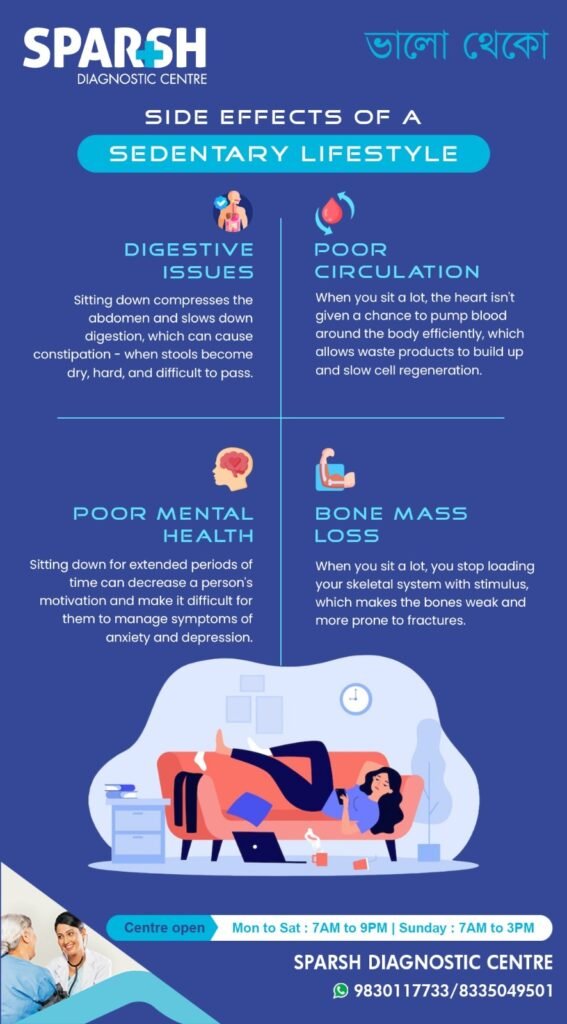
- Cardiovascular Strain: When sitting, blood pools in the legs, reducing venous return to the heart. This can lead to higher blood pressure and, over time, contribute to arterial stiffness and atherosclerosis. Studies have consistently shown that those with the highest sedentary time have a significantly increased risk of cardiovascular events, regardless of their exercise habits.
- Musculoskeletal Degeneration: The human body is designed for a dynamic balance of movement. Sitting, especially with poor posture, places uneven stress on the spine, flattens the lumbar curve, tightens hip flexors, and weakens core and back muscles. This leads to chronic pain, particularly in the lower back and neck, and increases the risk of disc herniation.
- Compromised Mental Health: Physical activity is a well-established mood booster, linked to the release of endorphins and brain-derived neurotrophic factor (BDNF), which is crucial for cognitive function. Inactivity is correlated with a higher incidence of depression, anxiety, and overall psychological distress. The isolation often associated with desk-bound work can compound these effects.
Part 2: The Unholy Alliance: Sedentary Behavior, Obesity, and Metabolic Syndrome
It’s critical to understand that sedentary behavior and obesity engage in a vicious, self-perpetuating cycle.
The Cycle of Disuse and Dysfunction
- The Spark: A person adopts a lifestyle—often due to work, commute, or habit—that involves prolonged sitting.
- The Metabolic Shift: As described, this sitting leads to reduced LPL activity, increased insulin resistance, and a propensity to store calories as fat, particularly visceral fat.
- Weight Gain: The metabolic changes, combined with a typical modern diet, lead to gradual weight gain and an increase in overall body fat.
- The Feedback Loop: As a person gains weight, movement often becomes more uncomfortable and physically demanding. Fatigue sets in more easily, creating a psychological and physical barrier to activity. This leads to even more sedentary behavior, which further accelerates the metabolic dysfunction.
- The Entrenchment: The cycle continues, entrenching the individual in a state of obesity and metabolic syndrome. Breaking this cycle requires understanding that it’s not just about willpower; it’s about disrupting deeply ingrained physiological patterns.
The “Active Couch Potato” Paradox
Perhaps the most insidious myth is that a vigorous 30-60 minute workout can fully counteract 9+ hours of continuous sitting. This is the “Active Couch Potato” phenomenon. While regular exercise is undeniably beneficial and crucial for health, it cannot completely negate the harms of prolonged inactivity.
Research has shown that individuals who meet the recommended weekly exercise guidelines (150 minutes of moderate-intensity activity) but are highly sedentary for the rest of the day still exhibit worse metabolic profiles—higher triglycerides, blood sugar, and waist circumference—compared to those who are more active throughout the day, even if their total formal exercise is less.
The takeaway is powerful: We need to think about movement in two distinct but complementary ways: Exercise (planned, structured activity) and Non-Exercise Activity Thermogenesis or NEAT (all the movement we do in our daily lives). For metabolic health, NEAT may be just as important as a dedicated workout.
Part 3: The Antidote to Stillness – A Practical Guide to Becoming an Active Human Again
Knowing the problem is only half the battle. The following strategies provide a multi-faceted approach to combat the sedentary lifestyle, designed to be implemented by anyone, regardless of their current fitness level.
Strategy 1: Redesign Your Workday
Your desk job doesn’t have to be a death sentence. Small, consistent changes can yield significant metabolic benefits.
- The Power of Micro-Breaks: The most impactful change you can make is to break up prolonged sitting. Set a timer for every 30 minutes. When it goes off, stand up for just 2-3 minutes. This is enough to reactivate your muscles and clear triglycerides from your bloodstream. Do a few calf raises, walk to get a glass of water, or simply stand and stretch.
- Adopt a Dynamic Workspace:
- Standing Desks: A sit-stand desk is a fantastic investment. The goal is not to stand all day (which can cause its own issues), but to alternate. A good starting ratio is 30 minutes sitting, 30 minutes standing. Gradually increase standing time as you adapt.
- Active Seating: Consider an unstable stool, a kneeling chair, or even a large stability ball (for short periods). These engage your core muscles and promote subtle, constant postural adjustments, preventing total muscular shutdown.
- Walk-and-Talk Meetings: Whenever possible, suggest a walking meeting. A 20-minute walking conversation is not only good for your metabolism but can also boost creativity and focus.
Strategy 2: Re-engineer Your Environment
Make movement the default, easy choice.
- Strategic Hydration: Use a small water glass instead of a large bottle. This forces you to get up more frequently to refill it, combining hydration with movement.
- Printer/Filing Far Away: Place commonly used office equipment, or even the trash can, on the other side of the room.
- Parking and Commuting: Park at the far end of the parking lot. Get off the bus or subway a stop early. Use the stairs instead of the elevator—a classic for a reason.
Strategy 3: Embrace NEAT (Non-Exercise Activity Thermogenesis)
This is the secret weapon. NEAT encompasses all the energy you burn doing everything except sleeping, eating, and sports-like exercise.
- Domestic Chores: Vacuuming, mopping, gardening, and washing the car are all NEAT goldmines.
- Fidgeting: It turns out that fidgeting is not a bad habit; it’s a metabolic boon. Tapping your feet, shifting in your seat, and gesturing while talking can burn hundreds of extra calories per day.
- Pace While You Wait: On a phone call? Stand up and pace. Waiting for your microwave? Do a few squats or leg lifts.
Strategy 4: Prioritize Structured Exercise Smartly
While NEAT is crucial, structured exercise remains vital for building strength, cardiovascular fitness, and resilience.
- Resistance Training is Non-Negotiable: Building muscle mass is one of the best long-term defenses against metabolic syndrome. Muscle is metabolically active tissue, meaning it burns calories even at rest. Aim for at least two full-body strength training sessions per week.
- Incorporate High-Intensity Interval Training (HIIT): For time-pressed individuals, HIIT can be incredibly efficient. Short bursts of intense effort (like 30 seconds of sprinting) followed by brief recovery periods have been shown to improve insulin sensitivity and cardiovascular health dramatically.
- Find Joy in Movement: The best exercise is the one you’ll consistently do. Whether it’s dancing, hiking, swimming, or a team sport, find activities you genuinely enjoy. This ensures long-term adherence.
Read more: Probiotics vs. Prebiotics: A Beginner’s Guide to Optimizing Your Gut Health
Part 4: The Mindset Shift – From Chore to Foundation
Ultimately, overcoming a sedentary lifestyle requires a fundamental shift in how we view movement. It cannot be seen as a separate “task” to be checked off a to-do list, only to be followed by a collapse on the sofa.
We must begin to see frequent, low-grade movement as the very foundation upon which our health is built. It is the background operating system that allows our bodies to function as they were designed. It is the price we must pay for the comfort we have created.
Reframe your thinking:
- Instead of “I have to go to the gym,” think “How can I incorporate more vitality into my day?“
- Instead of seeing a walk break as a distraction, see it as a productivity tool that clears your mind and resets your body.
- View movement not as a punishment for what you ate, but as a celebration of what your body can do.
Conclusion: Rising to the Challenge
The transition from a physically demanding agrarian life to a mentally demanding but physically stagnant digital one has been one of the most rapid and profound shifts in human history. Our biology has not kept pace. The result is the silent, creeping danger of the sedentary lifestyle—a primary actor in the global crises of obesity and metabolic syndrome.
But we are not powerless. By understanding the physiology of sitting—the muscle shutdown, the metabolic slowdown—we can deploy targeted strategies to fight back. Breaking up sitting time, redesigning our environments, embracing NEAT, and prioritizing smart exercise are not just lifestyle tips; they are essential prescriptions for modern health.
The journey from being desk-bound to defusing the danger is a daily practice. It is a commitment to choosing the stairs, to taking the walking meeting, to setting the timer, to fidgeting without shame. It is a conscious decision to re-inhabit our bodies and honor our evolutionary need for movement. The danger is real, but so is our capacity to overcome it. Rise up—your health depends on it.
Read more: The American Gut: Why IBS is So Common in the US and 5 Science-Backed Ways to Find Relief
Frequently Asked Questions (FAQ)
Q1: I exercise for an hour every day. Does that really not protect me from all the sitting?
A: While your daily exercise is immensely beneficial and puts you far ahead of someone who does nothing, the emerging scientific consensus is that it cannot fully undo the metabolic damage of prolonged, uninterrupted sitting. Think of it this way: exercising for one hour is like taking a powerful vitamin, but sitting for 9+ hours is like taking a slow-acting poison. You’re better off with the vitamin, but you’d be even better off if you stopped the poison. The goal is to combine your dedicated exercise with frequent movement breaks throughout the day.
Q2: What’s the single most effective change I can make at my desk job?
A: The most evidence-backed, high-impact change is to break up your sitting time every 30 minutes. Set a timer and stand up for just 2-5 minutes. Walk to the water cooler, do some gentle stretches, or simply stand and shift your weight. This regular interruption of the sedentary state is crucial for reactivating muscles and clearing metabolic waste from your bloodstream.
Q3: Are standing desks really worth the investment?
A: For most people in sedentary jobs, yes. A sit-stand desk is a powerful tool that allows you to easily alternate between sitting and standing, breaking up prolonged postures. However, it’s a tool, not a magic bullet. The key is variation—standing all day can lead to its own issues like varicose veins or foot pain. The ideal use is a 1:1 or 2:1 ratio of sitting to standing, changing your position regularly throughout the day.
Q4: I’ve heard the term “Metabolic Syndrome.” What exactly is it, and how do I know if I have it?
A: Metabolic Syndrome is a cluster of at least three of the following five conditions:
- Abdominal obesity (waist circumference >40 inches in men, >35 inches in women).
- Triglycerides level of 150 mg/dL or higher.
- Low HDL cholesterol (<40 mg/dL in men, <50 mg/dL in women).
- High blood pressure (130/85 mm Hg or higher).
- Elevated fasting blood sugar (100 mg/dL or higher).
You would need to be diagnosed by a healthcare professional based on clinical measurements. It’s a significant warning sign that your metabolic health is compromised, greatly increasing your risk for heart disease, stroke, and Type 2 Diabetes.
Q5: I have a bad back. A lot of exercise is painful for me. What can I do?
A: This is a common and important concern. First, always consult with a doctor or physical therapist for personalized advice. For low-impact, back-friendly movement, focus on:
- Walking: It’s one of the best and safest forms of activity. Start short and slow.
- Aquatic Therapy: Exercising in a pool reduces stress on joints and the spine.
- Focus on NEAT: You can dramatically increase your daily movement through household chores, gentle stretching, and frequent position changes without any formal “exercise.”
- See a Professional: A physical therapist can design a core-strengthening and stabilization program that directly addresses your specific back issues, building a foundation for more activity in the future.
Q6: How does stress and sleep play into this?
A: They are critical, interconnected factors. Chronic stress elevates cortisol, a hormone that promotes the storage of visceral fat and can increase blood sugar, directly contributing to metabolic syndrome. Poor sleep (less than 7 hours per night) disrupts the hormones leptin and ghrelin, making you feel hungrier and less satiated, and also worsens insulin resistance. Managing stress through mindfulness, meditation, or hobbies and prioritizing quality sleep are foundational pillars in the fight against the negative effects of a sedentary lifestyle.
Q7: I’m overwhelmed. Where should I start if I want to make a change?
A: Start small and be consistent. Don’t try to overhaul your life in one day. Pick ONE of these strategies to focus on for two weeks:
- Take a 5-minute walk after every meal.
- Set a 30-minute timer to stand and stretch at your desk.
- Park at the far end of every parking lot.
- Do 10 bodyweight squats every time you go to the bathroom.
Once that one change becomes a habit, add another. Small, sustainable changes compound into massive long-term health benefits.